as taught at Florida State University
A survey of the art, architecture, literature, music, religion, and philosophy of the modern world, from Gutenberg’s press in Mainz (ca. 1454) to the postmodern critique and the age of AI. Humanities I ends in Renaissance Florence; Humanities II begins with the printing press and asks how the modern West came to trust reason, progress, and the individual, and what that trust has cost.
MODULE I – The Rebirth (1454–1603)
Sec 1 • Defining the Modern
1.1 Philosophy • Modus & Modo: Method & the Way
1.2 History & Politics • Four Ages & the Promise of Progress
1.3 Literature & Drama • The First Information Age
1.4 Art & Architecture • Leonardo, Michelangelo, & the High Renaissance
1.5 Music • Petrucci & the First Printed Music
1.6 Religion • Faith, Reason, & the Individual
Sec 2 • The Reformation
2.1 History & Politics • Luther & the Fracturing of Christendom
2.2 Literature & Drama • 95 Theses & the German Bible
2.3 Music • “Ein feste Burg” & the Chorale
2.4 Art & Architecture • Dürer’s Prints & the Image of Reform
2.5 Philosophy • Conscience & Authority at Worms
2.6 Religion • Trent & the Counter-Reformation
Sec 3 • Elizabeth & the New Heavens
3.1 History & Politics • England’s Golden Age & the Sultan
3.2 Religion • The Book of Common Prayer & the King James Bible
3.3 Art & Architecture • Holbein’s The Ambassadors
3.4 Philosophy • Copernicus & the De-Centered Cosmos
3.5 Literature & Drama • Hamlet’s Modern Mind
3.6 Music • Dowland’s “Flow, My Tears”
MODULE II – Early Modern Philosophy (1604–1775)
Sec 4 • Baroque & the New Science
4.1 History & Politics • The Dutch Republic & the Market
4.2 Art & Architecture • Rembrandt’s Anatomy Lesson & Vermeer’s Astronomer
4.3 Religion • Splendor & Shadow: Caravaggio, Bernini, & Rome
4.4 Literature & Drama • Don Quixote & the Birth of the Novel
4.5 Philosophy • Galileo, Newton, & the Mechanical Cosmos
4.6 Music • Bach & Handel
Sec 5 • Leviathan: The State & Social Contract
5.1 History & Politics • From Civil War to the Glorious Revolution
5.2 Religion • Puritans, Quakers, & the Search for Toleration
5.3 Literature & Drama • Milton’s Paradise Lost
5.4 Philosophy • Hobbes, Locke, & Rousseau: The Social Contract
5.5 Art & Architecture • Versailles & the Taj Mahal
5.6 Music • Lully at Versailles & Purcell in London
Sec 6 • The Enlightenment & Its Shadows
6.1 Philosophy • Sapere Aude: Kant, the Philosophes, & the Encyclopédie
6.2 Literature & Drama • Candide: Voltaire Against Optimism
6.3 Religion • The Great Awakening: Wesley, Whitefield, & the Heart
6.4 History & Politics • First Nations: The Templo Mayor & Enlightenment’s Others
6.5 Art & Architecture • Chardin’s Saying Grace & the Aztec Codices
6.6 Music • The Classical Style: Mozart, Haydn, & Figaro
MODULE III – Nationalism & Industry (1776–1913)
Sec 7 • The Age of Revolutions
7.1 History & Politics • 1776 & 1789: Two Revolutions
7.2 Literature & Drama • Paine, Wollstonecraft, & the Rights of Man
7.3 Religion • Religious Liberty & the First Amendment
7.4 Art & Architecture • David’s Horatii & Athens on the Potomac
7.5 Music • “La Marseillaise” & Beethoven’s Eroica
7.6 Philosophy • Hegel, Napoleon, & the Birth of Nationalism
Sec 8 • Romanticism & Modern Science
8.1 Philosophy • Sturm und Drang: Goethe & the Romantic Self
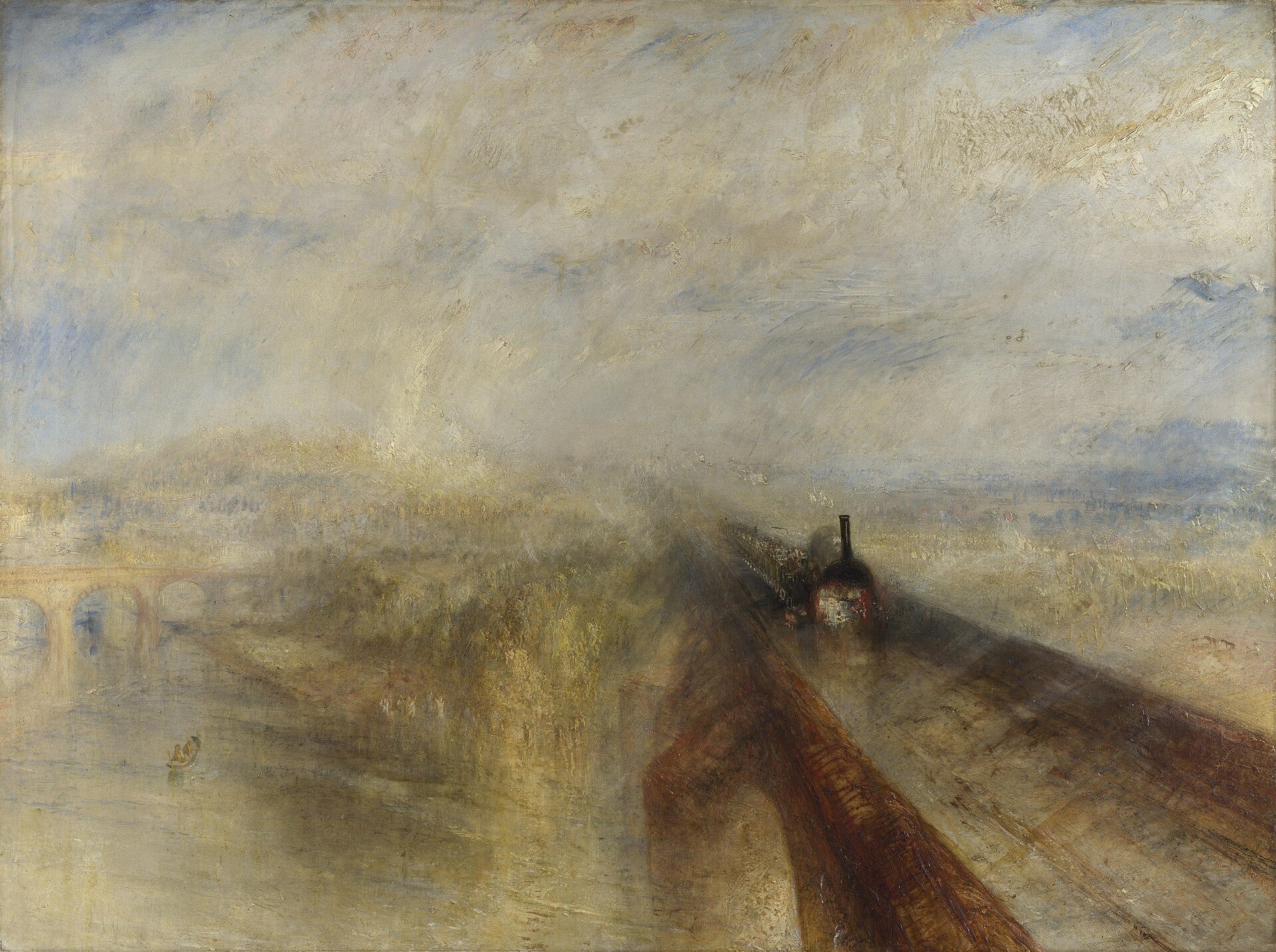
8.2 Art & Architecture • The Sublime: Friedrich’s Wanderer & Turner’s Storms
8.3 Music • Schubert’s Erlkönig, Beethoven’s Fifth, & Berlioz
8.4 Literature & Drama • Frankenstein: The Modern Prometheus
8.5 History & Politics • Questioning Progress: Blake, Wordsworth, & the Machine
8.6 Religion • The Second Great Awakening
Sec 9 • Industry & Empire
9.1 History & Politics • The Machine Age: From the Crystal Palace to Metropolis
9.2 Philosophy • The Colonizer’s Model: Mudimbe & The Idea of Africa
9.3 Art & Architecture • Turner’s Slave Ship & the Camera in the Colonies
9.4 Religion • Abolition: Faith Against Slavery
9.5 Literature & Drama • Uncle Tom’s Cabin & Hard Times
9.6 Music • Spirituals: “Go Down, Moses”
Sec 10 • Marx & the Age of Oil
10.1 Philosophy • 1848: Marx’s Manifesto & the Specter of Revolution
10.2 Literature & Drama • “Our Ford”: Alienation from Brave New World to Modern Times
10.3 Religion • The Salvation Army & the Social Gospel
10.4 Art & Architecture • Realism: Courbet, Daumier, & Painting the Poor
10.5 History & Politics • The Prize: Rockefeller, Persia, & the Age of Oil
10.6 Music • Joplin’s Ragtime: Music for a Mass Age
Sec 11 • Kierkegaard, Nietzsche, & the Fin de Siècle
11.1 History & Politics • The Nervous Age: Darwin, Freud, & the Fin de Siècle
11.2 Religion • The Present Age: Kierkegaard Against the Crowd
11.3 Literature & Drama • Dostoevsky’s Grand Inquisitor
11.4 Philosophy • Zarathustra: Nietzsche’s “Death of God”
11.5 Art & Architecture • The Painted Moment: Monet, Van Gogh, & Japonisme
11.6 Music • Wagner, Debussy, & Mahler’s Hammer
MODULE IV – The End of Modernity (1914–1960s)
Sec 12 • The World at War
12.1 History & Politics • 1914: Machine Guns, Mustard Gas, & All Quiet
12.2 Music • Stravinsky’s Rite of Spring & Shostakovich’s Fifth
12.3 Art & Architecture • The Modernist Rupture: Picasso, Duchamp, & the Bauhaus
12.4 Philosophy • Freud’s Civilization & Its Discontents
12.5 Literature & Drama • The Waste Land & the Harlem Renaissance
12.6 Religion • Night: Wiesel & the Break in Civilization
Sec 13 • Aftermath: The Bomb & the Absurd
13.1 History & Politics • By the Bomb’s Early Light: Hiroshima & the Atomic Imagination
13.2 Religion • Bonhoeffer’s Letters & Papers from Prison
13.3 Philosophy • Existentialism: Sartre, Beauvoir, & Freedom After Auschwitz
13.4 Literature & Drama • The Stranger: Camus & the Colonial Absurd
13.5 Art & Architecture • New York Steals Modern Art: Pollock & Rothko
13.6 Music • Parker’s Bebop & Cage’s 4′33″
Sec 14 • The Culture Industry & the Cold War
14.1 History & Politics • Levittown to Cape Canaveral: Suburbia & the Space Race
14.2 Philosophy • The Culture Industry: Adorno & Marcuse’s One-Dimensional Man
14.3 Art & Architecture • Pop Art: Warhol’s Soup Cans & Lichtenstein
14.4 Literature & Drama • The Crucible & Dr. Strangelove
14.5 Religion • King’s Letter from Birmingham Jail
14.6 Music • From “Strange Fruit” to Selma: Holiday, Dylan, & Hendrix
Sec 15 • The Postmodern Critique
15.1 Philosophy • Lyotard, Baudrillard, & the Postmodern Condition
15.2 Art & Architecture • After Modernism: Venturi, Gehry, & Nam June Paik
15.3 Music • Minimalism to Sampling: Glass, Reich, & Kraftwerk
15.4 History & Politics • The 21st Century & Its Discontents
15.5 Religion • The Desecularization of the World
15.6 Literature & Drama • Do Androids Dream?: Blade Runner, AI, & the Inhuman