ANCIENT HUMANITIES | HUM 2210
as taught at Tyler Junior College
A survey of the art, architecture, literature, music, religion, and philosophy of the ancient and medieval world, from the first cities of Mesopotamia (ca. 3500 BCE) to Renaissance Florence (ca. 1500 CE). This is not a World History course. A history course asks what happened; this one asks what each people made out of what happened to them, and why. Start with 1.1 Why the Humanities Matter.
MODULE I – Early Civilizations
Sec 1 • In the Beginning
1.1 Why the Humanities Matter
1.2 How to Read a Civilization
1.3 Before Writing
1.4 A Revolution in Food
1.5 What is Civilization?
1.6 The Bronze & Iron Ages
Sec 2 • Ancient Mesopotamia
2.1 History & Politics • Between the Rivers
2.2 Sacred Life • Temple & Priest-King
2.3 Art & Architecture • The Ziggurat of Ur
2.4 Music • The Lyres of Ur
2.5 Literature & Drama • Gilgamesh & the Enuma Elish
2.6 Philosophy • An Eye for an Eye
Sec 3 • Ancient Egypt
3.1 History & Politics • The Gift of the Nile
3.2 Sacred Life • Ra, Osiris, & Isis
3.3 Music • Hathor & the Sistrum
3.4 Art & Architecture • The Pyramids of Giza
3.5 Literature & Drama • The Book of the Dead
3.6 Philosophy • Ma’at & the Weighing of the Heart
Sec 4 • Ancient India
4.1 History & Politics • The Indus Valley & Ashoka
4.2 Music • Singing the Vedas
4.3 Sacred Life • Dharma & the Four Noble Truths
4.4 Philosophy • The Middle Way
4.5 Literature & Drama • The Mahabharata & the Gita
4.6 Art & Architecture • Stupas & the Image of the Buddha
Sec 5 • Ancient China
5.1 History & Politics • The Mandate of Heaven
5.2 Sacred Life • Heaven & the Ancestors
5.3 Literature & Drama • The Daodejing
5.4 Music • Bronze Bells & Confucius
5.5 Philosophy • Confucius & the Five Relationships
5.6 Art & Architecture • The Terracotta Army & the Great Wall
MODULE II – The Greco-Roman Traditions
Sec 6 • Early Greece
6.1 History & Politics • The Polis & the Birth of Democracy
6.2 Literature & Drama • Homer’s Iliad & Odyssey
6.3 Sacred Life • The Olympians & Athena’s City
6.4 Music • The Lyre & the Doctrine of Ethos
6.5 Philosophy • The Presocratics
6.6 Art & Architecture • From Geometric Pots to the Kritios Boy
Sec 7 • Classical Greece
7.1 History & Politics • Pericles, the Peloponnesian War, & Alexander
7.2 Art & Architecture • The Acropolis & the Parthenon
7.3 Sacred Life • Delphi, Dionysus, & the Mysteries
7.4 Music • The Tragic Chorus & the Greek Modes
7.5 Literature & Drama • Tragedy, Comedy, & Thucydides
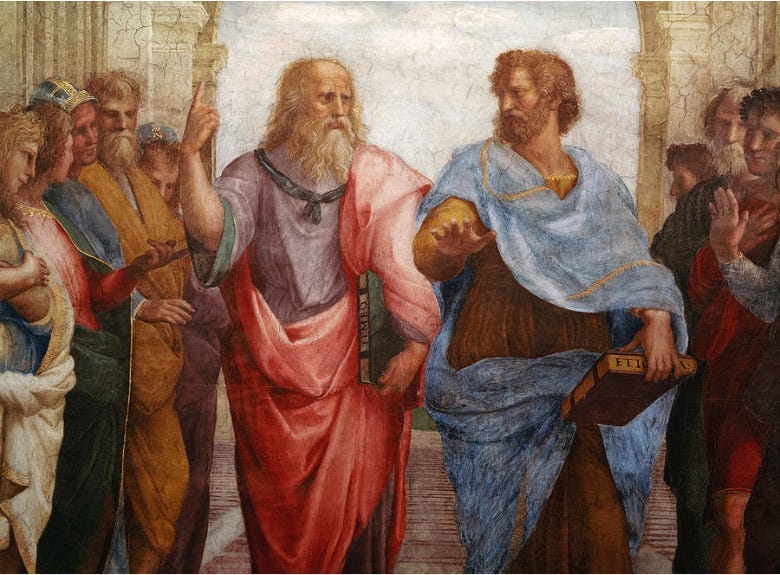
7.6 Philosophy • Socrates, Plato, & Aristotle
Sec 8 • The Romans
8.1 History & Politics • From Republic to Empire
8.2 Religion • Household Gods & the Imperial Cult
8.3 Literature & Drama • Virgil’s Aeneid & Roman Satire
8.4 Art & Architecture • Aqueducts, Arches, & the Colosseum
8.5 Music • The Water Organ & the Arena
8.6 Philosophy • Stoicism & Roman Law
MODULE III – The Abrahamic Traditions
Sec 9 • Ancient Israel
9.1 History & Politics • The Promised Land & the Kingdom of David
9.2 Religion • Covenant, Shabbat, & the Mitzvot
9.3 Art & Architecture • The Ark & the Temple in Jerusalem
9.4 Music • The Psalms of David
9.5 Literature & Drama • The Tanakh & the Talmud
9.6 Philosophy • Justice, Lovingkindness, & Repentance
Sec 10 • Early Christendom
10.1 History & Politics • From the Apostles to Constantine
10.2 Literature & Drama • The Gospels & the Letters of Paul
10.3 Religion • Nicaea & the Creed
10.4 Music • Hymns of the Early Church
10.5 Philosophy • St. Augustine
10.6 Art & Architecture • From the Catacombs to Hagia Sophia
Sec 11 • Early Islam
11.1 History & Politics • Mecca, Medina, & the Caliphate
11.2 Literature & Drama • The Qur’an & the Hadith
11.3 Philosophy • The House of Wisdom
11.4 Religion • The Five Pillars
11.5 Music • The Call to Prayer & Qur’anic Recitation
11.6 Art & Architecture • The Mosque, Calligraphy, & the Arabesque
MODULE IV – The Rise of Europe
Sec 12 • The Holy Roman Empire
12.1 History & Politics • Charlemagne & Feudal Europe
12.2 Literature & Drama • Beowulf & the Heroic Code
12.3 Religion • Monks, Popes, & Canon Law
12.4 Philosophy • The Trivium & the Carolingian Renaissance
12.5 Art & Architecture • Romanesque Churches & the Book of Kells
12.6 Music • Gregorian Chant
Sec 13 • The High Middle Ages
13.1 History & Politics • The Great Schism & the Crusades
13.2 Literature & Drama • The Song of Roland & the Troubadours
13.3 Religion • Monastic Reform & St. Francis
13.4 Music • Hildegard & the School of Notre Dame
13.5 Art & Architecture • The Gothic Cathedral
13.6 Philosophy • Aquinas, Maimonides, & Scholasticism
Sec 14 • The Late Middle Ages
14.1 History & Politics • Famine, War, & the Black Death
14.2 Religion • Avignon & the Great Western Schism
14.3 Philosophy • William of Ockham & the Razor
14.4 Music • Ars Nova & Machaut
14.5 Art & Architecture • Giotto & the Dance of Death
14.6 Literature & Drama • Dante, Boccaccio, & Chaucer
Sec 15 • The Renaissance
15.1 History & Politics • Florence & the Medici
15.2 Philosophy • Pico, Erasmus, & Humanism
15.3 Art & Architecture • Brunelleschi’s Dome & Leonardo
15.4 Music • Josquin & the Art of Polyphony
15.5 Literature & Drama • Petrarch, Machiavelli, & Shakespeare
15.6 Religion • The Gutenberg Bible & the Eve of Reform
MODERN HUMANITIES | HUM 2230
as taught at Florida State University
MODULE I – The Rebirth (1454–1603)
Sec 1 • Defining the Modern
1.1 Modus & Modo: The Method & the Way
1.2 Optimism & the Promise of Progress
1.3 Reason, Secularism, & the Individual
1.4 Mapping the Modern: 4 Ages in 15 Weeks
Read: Jervis, Exploring the Modern
Art: Duccio’s Madonna & Dürer’s Self-Portrait
Listen: Hildegard’s chant & Josquin’s polyphony
Sec 2 • Renaissance & the Printing Press
2.1 Rebirth: The Medici, Humanism, & the Dignity of Man
2.2 Genius: Leonardo, Michelangelo, & Raphael
2.3 1454: Gutenberg & the First Information Age
2.4 Machiavelli: Politics without Heaven
Culture & Values chs. 12–13
Read: Machiavelli, The Prince (sel.)
Art: Botticelli, Birth of Venus & Raphael, School of Athens
Listen: Josquin, Ave Maria… Virgo serena
Sec 3 • Reformation & the New Heavens
3.1 Luther & the Fracturing of Christendom
3.2 Trent & the Counter-Reformation
3.3 1543: Copernicus & the De-Centered Cosmos
3.4 Elizabeth & Shakespeare: Hamlet’s Modern Mind
Culture & Values ch. 14
Read: Luther, Reformation Writings (sel.)
Read2: Shakespeare, Hamlet (sel.)
Art: Dürer’s prints; Holbein, The Ambassadors
Listen: Dowland, “Come Again” & Luther, “Ein feste Burg”
MODULE II – Early Modern Philosophy (1604–1775)
Sec 4 • Baroque & the New Science
4.1 Splendor & Shadow: Bernini, Caravaggio, & Rome
4.2 The Dutch Golden Age: Rembrandt, Vermeer, & the Market
4.3 1633: Galileo & the New Science on Trial
4.4 Newton’s Clockwork: The Mechanical Cosmos
Culture & Values ch. 15
Read: Galileo, Starry Messenger (sel.)
Art: Caravaggio, The Calling of St. Matthew & Bernini, Ecstasy of St. Teresa
Art2: Rembrandt, The Anatomy Lesson & Vermeer, The Astronomer
Listen: Bach & Handel
Sec 5 • Leviathan: The State & Social Contract
5.1 Hobbes after the Civil War
5.2 Locke: Property, Toleration, & the Blank Slate
5.3 Versailles: Absolutism as Theatre
5.4 Rousseau & the General Will
Culture & Values ch. 15 (cont.)
Read: Hobbes, Leviathan (sel.), & Locke, Second Treatise (sel.)
Art: the Leviathan frontispiece & Rigaud, Louis XIV
Listen: Lully at the Sun King’s court & Purcell
Sec 6 • The Enlightenment & Its Shadows
6.1 Sapere Aude: Philosophes, Salons, & the Encyclopédie
6.2 Candide: Voltaire Against Optimism
6.3 First Nations: The Americas & Enlightenment’s Others
6.4 The Classical Style: Mozart, Haydn, & the Age of Elegance
Culture & Values chs. 16 & 19
Read: Voltaire, Candide (sel.); Kant, “What Is Enlightenment?”;
Read2: Waters, American Indian Thought (sel.); Stannard, American Holocaust (sel.)
Art: Fragonard, The Swing; the Templo Mayor & the codices
Listen: Mozart, The Marriage of Figaro (sel.)
MODULE III – Nationalism & Industry (1776–1913)
Sec 7 • The Age of Revolutions
7.1 1776: Common Sense & the Rights of Man
7.2 1789: Paris, the Terror, & the Marseillaise
7.3 Athens on the Potomac: Neoclassicism & the New Republics
7.4 Goya & Napoleon: The Birth of Nationalism
Culture & Values chs. 19–20
Read: Paine, Common Sense (sel.); Hutchinson & Smith, Nationalism (sel.)
Art: David, Oath of the Horatii & Death of Marat; Goya, The Third of May 1808
Listen: “La Marseillaise” & Beethoven, Eroica (and the torn dedication)
Sec 8 • Romanticism & Modern Science
8.1 Sturm und Drang: Goethe & the Sorrows of the Self
8.2 The Sublime: Friedrich, Turner, & Beethoven
8.3 Frankenstein: The Modern Prometheus
8.4 Questioning Progress: Romanticism Against the Machine
Culture & Values ch. 20
Read: Shelley, Frankenstein (novel #1) & Goethe, The Sorrows of Young Werther (sel.)
Art: Friedrich, Wanderer Above the Sea of Fog & Turner’s storms; Fuseli, The Nightmare
Listen: Schubert, Erlkönig; Beethoven’s No. 5; Berlioz, Symphonie fantastique
Sec 9 • Industry & Empire
9.1 The Machine Age: Coal, Rail, & the Crystal Palace
9.2 Metropolis: Picturing the Industrial City
9.3 Europeans Seize the World: Africa & the Colonizer’s Model
9.4 Uncle Tom’s Cabin: Abolition & the Sentimental Weapon
Culture & Values chs. 17–18, 20
Read: Mudimbe, The Idea of Africa (sel.) & Stowe, Uncle Tom’s Cabin (sel.)
Read2: Dickens, Hard Times (rec.)
Art: the Crystal Palace; Turner, The Slave Ship; the camera goes to the colonies
Listen: spirituals — “Go Down Moses”
Screen (first film): Metropolis
Sec 10 • Marx & the Age of Oil
10.1 1848: The Manifesto & the Specter of Revolution
10.2 Alienation: The Self on the Assembly Line
10.3 The Prize: Rockefeller & the Age of Oil
10.4 Realism: Courbet, Daumier, & Painting the Poor
Culture & Values chs. 20–21
Read: Marx, The Communist Manifesto (sel.); Yergin, The Prize (sel.)
Read2: Economides, The Color of Oil (sel.); Huxley, Brave New World (sel. — “Our Ford”)
Art: Courbet, The Stone Breakers & Daumier, Third-Class Carriage;
Art2: Millet, The Gleaners & Menzel, The Iron Rolling Mill
Listen: Joplin’s ragtime — music for a mass age
Screen (brief selection): Modern Times
Sec 11 • Kierkegaard, Nietzsche, & the Fin de Siècle
11.1 The Present Age: Kierkegaard Against the Crowd
11.2 Zarathustra: Nietzsche & the Death of God
11.3 The Painted Moment: Impressionism & Its Rebels
11.4 The Nervous Age: Darwin, Freud, & Mahler’s Hammer
Culture & Values ch. 21
Read: Kierkegaard, The Present Age (sel.); Nietzsche, Thus Spoke Zarathustra (sel.)
Art: Monet, Impression, Sunrise; Van Gogh, The Starry Night
Art2: Cézanne & Hokusai & Japonisme
Listen: Debussy, Prélude à l’après-midi d’un faune
Listen2: Mahler, Symphony No. 6 in A Minor (1906) and its hammer blows!
MODULE IV – The End of Modernity (1914–1960s)
Sec 12 • The World at War
12.1 1914: Machine Guns, Mustard Gas, & All Quiet
12.2 The Modernist Rupture: Dada, Duchamp, & The Rite
12.3 The Grapes of Wrath: Depression & the New Deal
12.4 Night: The Holocaust & the Break in Civilization
Culture & Values ch. 22
Read: Remarque, All Quiet on the Western Front (sel.) & Wiesel, Night (sel.)
Read2: Steinbeck, The Grapes of Wrath (sel.) & Freud, Civilization & Its Discontents (sel.)
Art: Otto Dix’s war prints; Duchamp, Fountain; Dalí;
Art2: Lange, Migrant Mother; Picasso, Guernica
Listen: Stravinsky, The Rite of Spring; Shostakovich, Symphony No. 5 in D Minor
Screen (sel.): All Quiet on the Western Front (1930); Night and Fog
Sec 13 • Aftermath: The Bomb & the Absurd
13.1 By the Bomb’s Early Light: Hiroshima & the Atomic Imagination
13.2 Existentialism: Sartre, Beauvoir, & Freedom After Auschwitz
13.3 The Stranger: Camus & the Colonial Absurd
13.4 New York Steals Modern Art: Pollock, Rothko, & Bebop
Culture & Values ch. 23
Read: Camus, The Stranger (novel #2) & Boyer, By the Bomb’s Early Light (sel.)
Read2: Sartre, Existentialism Is a Humanism (sel.) & Beauvoir, The Second Sex (sel.)
Art: Pollock’s drips & Rothko’s fields
Listen: Parker’s bebop; Cage, 4′33″
Sec 14 • The Culture Industry & the Cold War
14.1 Manipulation: Adorno & the Culture Industry
14.2 One-Dimensional Man: Marcuse, Madison Avenue, & Suburbia
14.3 Strange Fruit to Selma: Civil Rights & the Counterculture
14.4 Dr. Strangelove: The Binary World
Culture & Values ch. 23
Read: Adorno & Horkheimer, The Culture Industry (sel.) & Marcuse, One-Dimensional Man (sel.)
Read2: Engelhardt, The End of Victory Culture (sel.) & MLK, Letter from Birmingham Jail
Art: Warhol’s soup cans, Lichtenstein’s pop art, & Levittown through the lens
Listen: Holiday, Strange Fruit, Bob Dylan, & Hendrix’s Star-Spangled Banner
Screen (sel.): Dr. Strangelove
Sec 15 • The Postmodern Critique
15.1 The Postmodern Condition: Lyotard & the End of Grand Narratives
15.2 Simulacra: Baudrillard, Warhol, & Hyperreality
15.3 The 21st Century & Its Discontents
15.4 Do Androids Dream?: Blade Runner, AI, & the Inhuman
Culture & Values ch. 23
Read: Lyotard, The Postmodern Condition (sel.) & The Inhuman (sel.)
Read2: Baudrillard, Simulacra and Simulation (sel.) & Dick, Do Androids Dream of Electric Sheep? (sel.)
Art: Venturi & Gehry — architecture after modernism
Art2: Nam June Paik’s screens & the machine-made image (2020s)
Listen: Glass & Reich’s minimalism; Kraftwerk, Computer World; sampling as pastiche
Screen (film #2): Blade Runner